India’s military strategy has never faced a test quite like this one. Consider the map for a moment. India shares land borders with two nuclear-armed states it has fought wars against, sits at the top of an ocean that a third power is methodically turning into its own strategic backyard, and has spent decades building a foreign policy deliberately designed to avoid the kind of binding alliances that might actually help when things go wrong. This is the situation India has inherited, and the world is now moving in ways that make it considerably more dangerous than it was even five years ago.
The Geography No Diplomat Can Fix
Since the June 2020 Galwan Valley clash, where Indian and Chinese soldiers fought hand-to-hand in sub-zero darkness and twenty Indians were killed, the People’s Liberation Army has not slowed down. It has accelerated. New roads, upgraded airfields, hardened shelters, and permanent forward positions along the Line of Actual Control have fundamentally changed the military geography of the Himalayas. China does not need to launch a war to shift the balance of power on that frontier. It is doing so continuously, through infrastructure, at a pace that India has struggled to match.
The western front operates on entirely different logic. Pakistan’s conventional military is outmatched by India’s, and everyone knows it. So Pakistan has built its strategy around the gap between conventional inferiority and nuclear deterrence, filling that space with proxy groups who attack, destabilise, and bleed India while Islamabad maintains enough deniability to prevent full-scale retaliation. The nuclear weapons are not there to fight a war. They are there to ensure India can never finish one. Every Indian military planner knows that any conventional escalation against Pakistan carries a ceiling above which things become existential. Pakistan has calculated that ceiling precisely, and operates just below it.
India's defence, delivered twice a week.
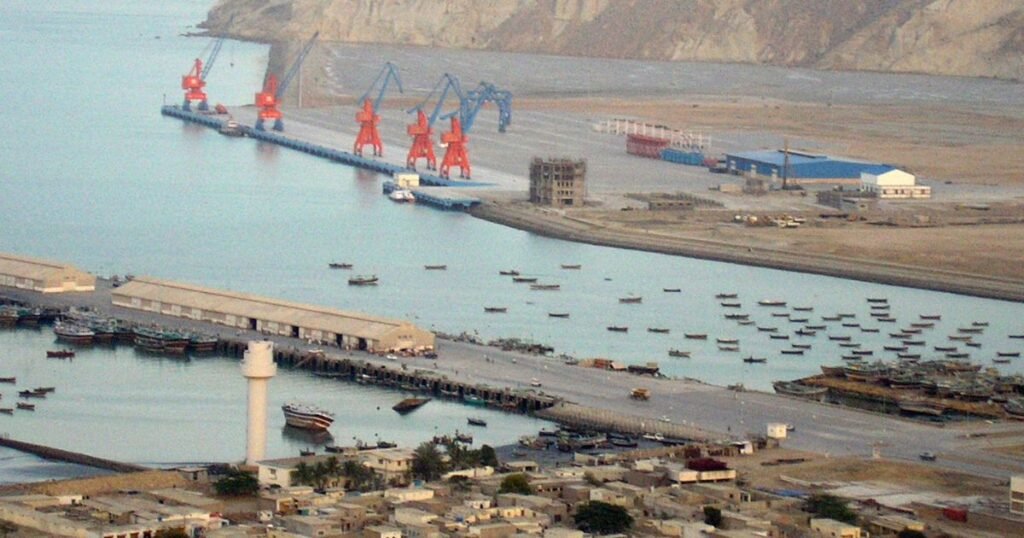
Then there is the Indian Ocean, which is increasingly a misnomer. China’s String of Pearls, a network of ports and logistics facilities stretching from Gwadar in Pakistan through Hambantota in Sri Lanka, Chittagong in Bangladesh, and Kyaukpyu in Myanmar, has been under construction for two decades while India alternated between dismissing it as commercial infrastructure and worrying about it in strategy documents. The facilities are real, the pattern is deliberate, and the effect is that China now has a framework for sustained naval presence across waters that India once dominated without serious competition.
Few major powers in the world face a combination of threats like this. A powerful rival pressing on the land border, a hostile nuclear neighbour running asymmetric operations to the west, and an encircling maritime strategy playing out in the surrounding ocean. The geography is not going to change. The neighbours are not going to become friendly. The strategic situation demands a response proportional to the actual threat.
Why the Phone Calls Won’t Save India’s Military Strategy
In April 2024, Iran launched over 300 drones and missiles at Israel in a single night. The United States, the United Kingdom, France, and Jordan helped intercept the barrage. The operation worked, and it worked because those countries had spent decades building shared infrastructure, integrated command systems, and the kind of political commitment that does not require a phone call to activate when missiles are already airborne.
India has no equivalent structure, and this is not an accident. India’s strategic autonomy doctrine, inherited from the Non-Alignment Movement and refined over decades of careful diplomatic positioning, deliberately avoids the binding commitments that create genuine alliances. The benefits are real. India buys weapons from Russia, America, France, and Israel simultaneously. It maintains relationships with countries that would otherwise be incompatible partners. It avoids being dragged into conflicts that are not its own.
The cost of that flexibility is that when the pressure comes, India faces it largely alone. In a serious conflict with China, the United States would almost certainly provide political support, some intelligence sharing, and possibly accelerated equipment deliveries. What it would not do is commit military force automatically, without calculation, without domestic political debate, without weighing whether the cost of direct confrontation with Beijing over Himalayan territory is worth bearing. That calculation takes time, and modern high-intensity conflict does not wait for it.
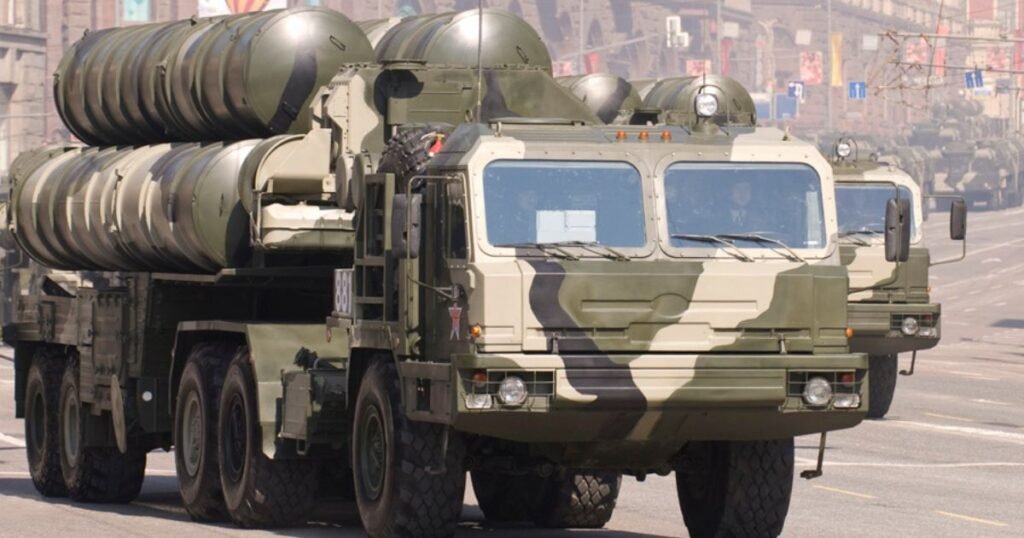
Russia, which supplied the majority of India’s major weapons platforms for decades, has fundamentally changed its strategic position since the Ukraine invasion. Moscow is now economically dependent on Beijing, diplomatically aligned with China against the Western order, and consuming its own defence production capacity in an active war. The reliability of Russian supply chains for Indian equipment, already under pressure from sanctions and production constraints, is not what it was. India’s largest traditional supplier is now, in effect, a partner of India’s primary threat.
The lesson from the Middle East is not simply that alliances are useful. It is that Israel built its own air defence architecture, its own missile systems, its own intelligence infrastructure, and then its allies added to what already existed. The allied contribution was real and significant, but it was built on top of Israeli capability, not substituted for it. India has not built that foundation.
Four Decades of Evidence
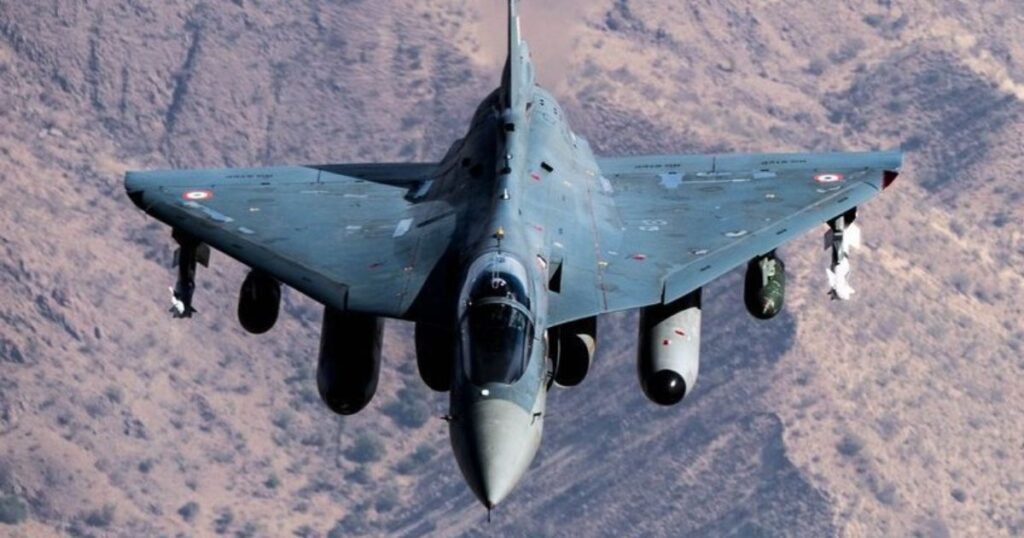
The Tejas light combat aircraft programme began in 1984. After forty years of development, it has reached operational squadron strength in a configuration that remains less capable in several respects than the aircraft it was designed to replace. The programme reflects genuine engineering achievement by scientists and designers working within a system that consistently prioritised process over speed, risk aversion over ambition, and imported solutions over domestic ones whenever the timeline got uncomfortable.
India currently imports roughly sixty percent of its defence equipment by value. Each of those imports represents a dependency on a foreign government’s continued willingness to supply, maintain, and support the equipment in question. In peacetime, these dependencies are manageable. In a sustained conflict, supply chains become targets and leverage points. Spare parts stop arriving. Software updates get delayed. The country that manufactured your air defence system has an opinion about how you use it.
The defence industrial base India has built is not small. DRDO has produced genuinely capable systems. HAL manufactures aircraft. BrahMos is a world-class cruise missile that India co-developed and now exports. The problem is not that India has nothing. The problem is that what exists is nowhere near sufficient for the threat environment India now faces, and the pace at which it is being built has not historically matched the urgency the strategic situation demands.
What Matching the Threat Actually Requires
Israel’s defence industry, built by a country of nine million people with no strategic depth and hostile neighbours on multiple sides, is the most cited comparison in these discussions, and it is cited repeatedly because the logic is genuinely instructive. Rafael, Elbit, and Israel Aerospace Industries did not emerge from comfortable long-term planning cycles. They emerged because Israel looked at its situation clearly and concluded that dependence on foreign suppliers was a vulnerability it could not afford. The result, built over decades of sustained investment and political commitment, is one of the most sophisticated defence industrial bases in the world relative to the country’s size.
India has vastly more resources, a larger industrial base, and a technology sector that has demonstrated it can compete at the highest levels globally. What has been missing is the treatment of defence self-reliance as genuinely urgent rather than as a policy preference to be pursued at a comfortable pace. The iDEX programme has produced real results and real companies. The defence corridors in Uttar Pradesh and Tamil Nadu represent serious infrastructure investment. Private sector participation in defence manufacturing has expanded meaningfully in recent years. These are genuine developments, and dismissing them would be unfair.
They are also insufficient at their current scale and speed for what India’s strategic situation actually requires. The gap between India’s threat environment and its defence industrial capacity is real, it is measurable, and it is not closing fast enough given how quickly the external situation is deteriorating.
The Iran-Israel exchange, the war grinding on in Ukraine, the sustained pressure building around Taiwan, the India-Pakistan tensions that flared recently, none of these are isolated events that will resolve themselves and return the world to the relative stability of the previous decade. They are indicators of an era in which the countries that have invested seriously in their own defence capability will have options that others will not.
India has the resources, the talent, and the industrial foundation to build what its strategic situation demands. The question of whether India’s military strategy will move with the urgency that situation requires is one that the next few years will answer, one way or another.