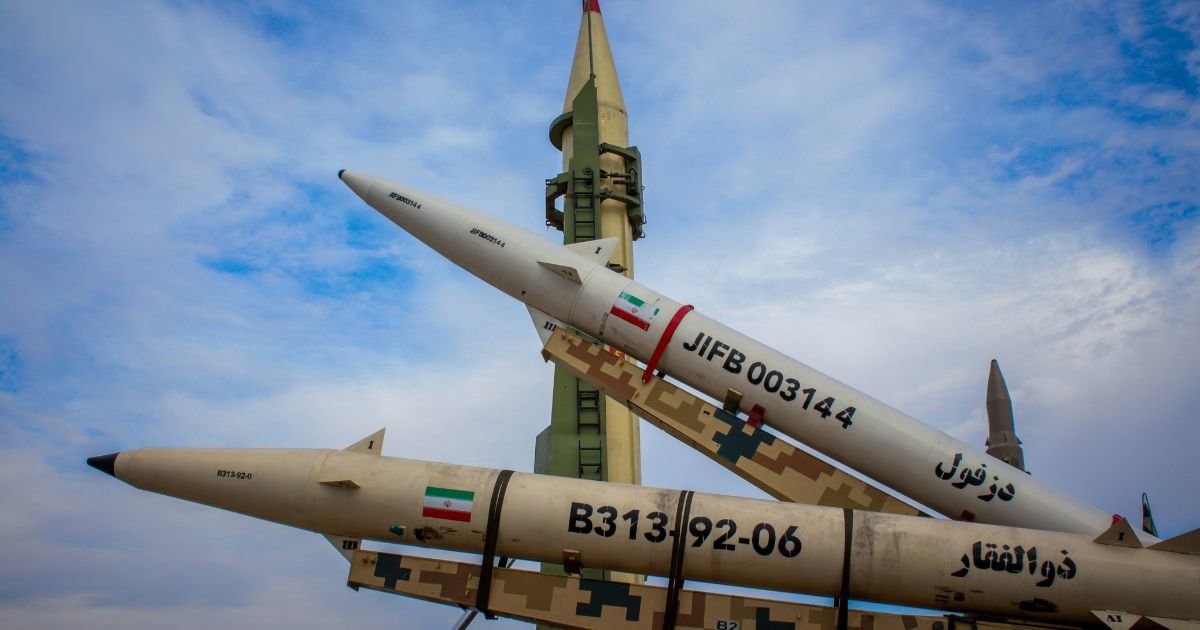
On March 7, 2026, an Iranian Fattah-2 hypersonic glide vehicle struck an AN/TPY-2 radar installation in the Gulf. The radar costs roughly $2.7 billion. It took one missile. The Fattah-2 approaches its target at Mach 15, skipping along the upper atmosphere in a trajectory that defeats the predictive geometry THAAD and Arrow-3 depend on. Iranian engineers designed it, Iranian factories built it, and the IRGC Aerospace Force fired it. No foreign technology transfers. No joint development agreements. No licensed components from a friendly power.
Iran built that missile while cut off from the global financial system, blacklisted from dual-use technology exports, and unable to purchase a spare part for a commercial aircraft. India, on the other hand, signed 84 defence procurement contracts in fiscal year 2023-24 alone. The juxtaposition is not incidental. It is the central fact of Indian defence procurement over the past four decades, made newly visible by a war India is watching from the outside.
The Comfort of Shopping
The standard defence of India’s import habit is strategic flexibility. Buying from Russia, France, Israel, and the United States simultaneously means no single supplier holds leverage. Diversification is presented as sophistication, and successive governments have repeated the argument with enough confidence that it rarely gets challenged.
India's defence, delivered twice a week.
What it conceals is the dependency it creates at the level of doctrine. A country that buys its weapons cannot build a saturation doctrine around them. Iran’s March 2026 operational concept works precisely because Iran controls the entire stack: cheap Shahed drones that exhaust interceptors in Phase 1, the Khorramshahr-4 with its 80-bomblet cluster warhead dispersing across 16 kilometres in Phase 2, and the Fattah-2 gliding through the gap in Phase 3. Each weapon was designed to work with the others. The doctrine and the arsenal were built together, indigenously, over decades.
India’s most capable precision strike asset is the BrahMos, a joint programme with Russia. Its hypersonic cruise missile completed its first long-range test in November 2024 with no induction timeline announced. The Pralay tactical ballistic missile is only now entering service with the Integrated Rocket Force, with the first regiment expected by 2026-27. India currently holds 120 Pralay missiles, with 250 more in acquisition. Iran fired over 500 ballistic missiles in a single conflict in 2025, reconstituted its heavy stockpile to roughly 2,000 missiles by December of that year, and fired another 300 in the first ten days of the 2026 war.
These are not comparable inventories. The gap was not produced by Iran having a larger economy or a more capable scientific base. It was produced by compulsion versus choice.
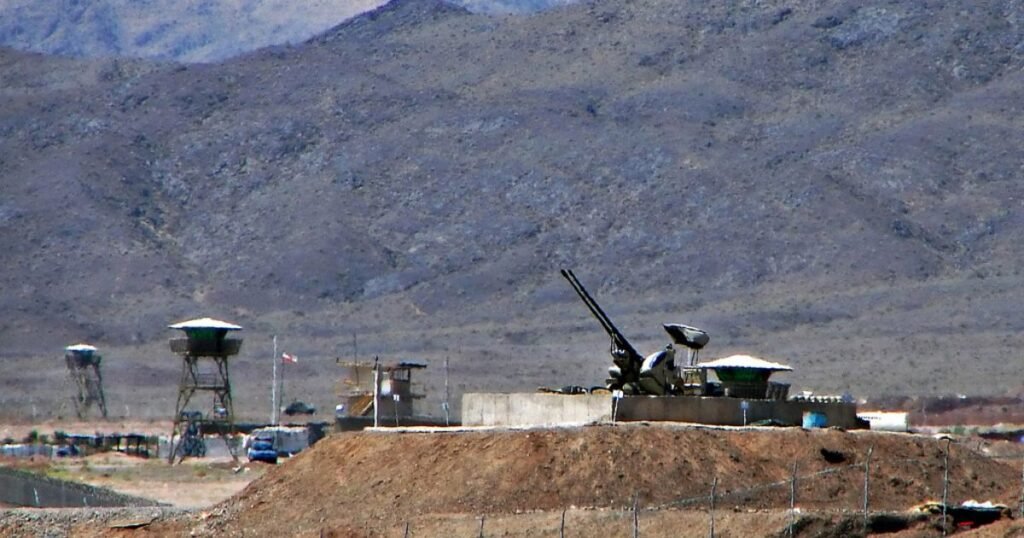
What Sanctions Actually Built: Iran Hypersonic Missiles and More
The Kheibar Shekan is a third-generation solid-fuel missile that can be launched from a concealed truck, fired, and hidden again before a retaliatory drone can locate the launcher. The launch window is under 12 minutes. Iran built this operational reality from scratch. The missile reaches Mach 12 and carries a maneuverable reentry vehicle with terminal-phase fins that allow sharp course corrections in the final seconds of flight.
The Khorramshahr-4 uses hypergolic liquid fuel that can be stored pre-loaded inside the missile for years. Iran had to master liquid-propellant storage chemistry without foreign assistance because there was no one to call. The result is a missile carrying a 1,500 kilogram warhead, fitted with cluster submunitions in the March 2026 strikes, that released 80 bomblets at 7 kilometres altitude over a 16 kilometre diameter. A single missile saturating an entire airbase.
None of this was inevitable. Iran did not begin with a sophisticated industrial base. It began with a problem it could not outsource and an adversary it could not appease, and it built upward from there.
India has been developing a domestically produced hypersonic glide vehicle since at least 2019. The DRDO demonstrated a scramjet-powered hypersonic technology demonstrator in 2019 and again in 2020. Neither test produced a weapon programme with a public induction timeline. The AD-AH anti-hypersonic interceptor, designed to defeat exactly the class of weapon Iran is now firing in combat, was announced as a development programme in January 2026. India is beginning to develop a defence against a weapon a sanctioned state has already deployed offensively.
The Forty-Year Conversion Problem
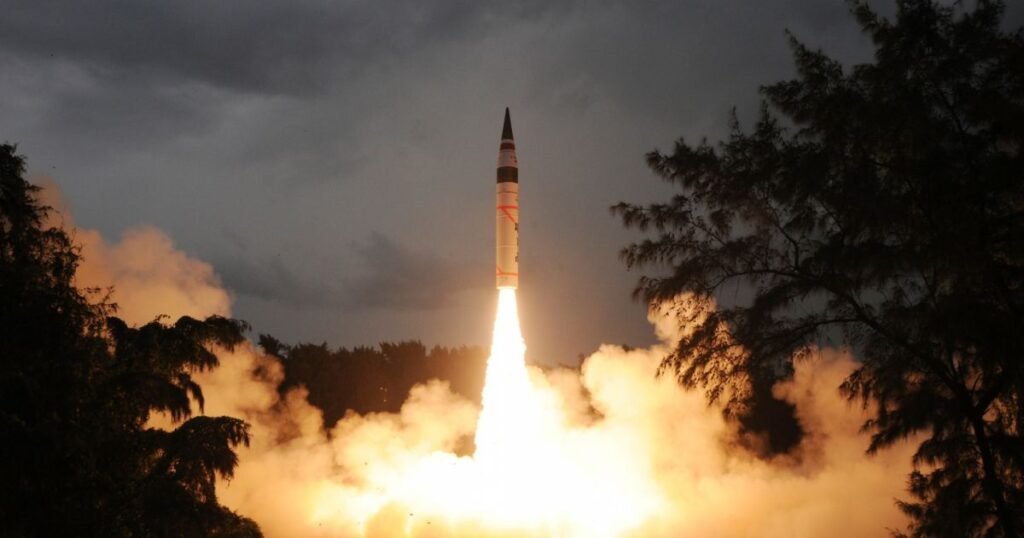
India’s Agni-V, the country’s most capable strategic missile, took roughly four decades from concept to its MIRV-equipped variant tested in March 2024. The Fattah-2 went from public announcement in November 2023 to combat deployment in March 2026, a span of 28 months. The comparison is not entirely fair since Agni-V carries nuclear warheads across intercontinental ranges and involves far greater complexity. But the pattern it reflects is consistent across every major DRDO missile programme: development timelines measured in decades, tests celebrated as milestones rather than treated as precursors to production, and the distance between a successful trial and a fielded system in operational quantity remaining enormous.
Pralay is the most recent example. Sanctioned in 2015, first tested in December 2021, featured at the Republic Day parade in January 2025, and entering service in 2026-27 with 120 missiles. Eleven years from sanction to initial operational capability for a tactical ballistic missile with a range of 150 to 500 kilometres. Iran produced, tested, and combat-deployed the Fattah-2 in 28 months.
The issue is not DRDO’s engineering competence, which is real and documented. The issue is the system around DRDO: procurement bureaucracy that treats a successful test as the end of a programme rather than the beginning of a production decision, defence budgets that chronically underfund capital expenditure, and a political culture that celebrates the announcement of a weapons programme as if it were equivalent to inducting it.
The Honest Case for Imports
The strongest counterargument deserves a direct answer. India’s strategic situation is not Iran’s. Iran built its missile programme as a deterrent against a technologically superior adversary with no prospect of alliance support. India has options Iran never had: access to Russian S-400 systems, Israeli co-developed MRSAM, American intelligence cooperation, and the genuine technological output of the BrahMos programme. Buying the best available system is faster and, in the short term, cheaper than developing a domestic equivalent. When the threat is immediate and the indigenous programme is a decade away, the import is the rational choice.
The argument has genuine force. The problem is the time horizon at which it fails.
Israel needed emergency US resupply of Arrow-3 interceptors within days of the 2026 Iran war beginning. Israel has the most extensively backed alliance relationship in the world and still nearly ran out. India’s S-400 interceptor supply runs through a Russia under sanctions and fighting its own war in Ukraine. Its BrahMos supply chain runs through a joint venture that depends on Russian components. In a conflict lasting more than a few days, the resupply question is not theoretical. Import dependency does not announce itself as a vulnerability. It appears suddenly, at the worst possible moment, when the shooting has already started.
The Price of the Choice India Kept Making
Iran did not set out to build the world’s most operationally creative missile programme. It set out to survive. The sanctions regime intended to prevent Iranian weapons development instead produced the industrial base, the engineering culture, and the combat doctrine now demonstrating, in live fire, what a country looks like when it has no alternative.
India always had an alternative. It kept taking it.
The Integrated Rocket Force, India’s answer to the PLA Rocket Force and to the two-front missile threat from China and Pakistan, is entering service in 2026-27 with 120 Pralay missiles. The PLA Rocket Force operates over 2,000 conventional ballistic missiles. That gap will not close through procurement. It will not close through joint ventures. It closes only through the kind of sustained, unglamorous domestic production commitment that India has consistently deferred in favour of the next foreign contract.
The Fattah-2 is not an argument that India should build offensive hypersonic weapons to threaten its neighbours. It is an argument about what a country forfeits when its arsenal is assembled from other people’s catalogues. Iran, with no money, no friends, and no options, built a weapon that cracked the world’s most defended air shield. India, with all three, is still placing orders.