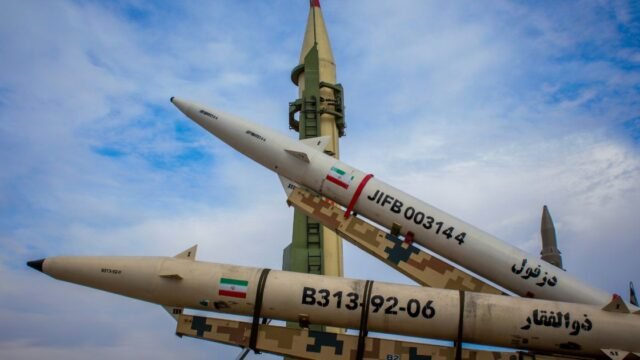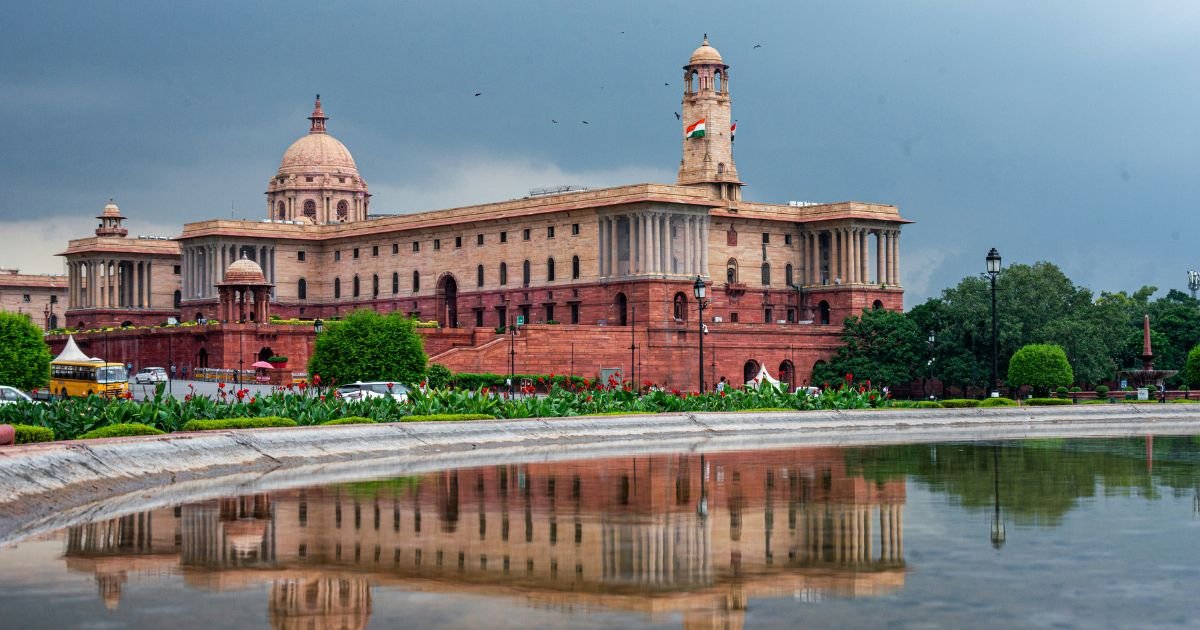
Every February, India’s defence establishment receives its annual number, delivers its formal gratitude, and moves on. This year, the number is ₹7.85 lakh crore: the largest defence allocation in India’s history, a 15 percent increase over the previous year, and the first budget presented after Operation Sindoor demonstrated, in real time, what India’s military can and cannot do. The government has framed it as a reckoning. A post-Sindoor correction. An unprecedented commitment to modernisation.
The headline is not wrong. But it is not the whole story.
The real question buried inside this budget is one India has been avoiding for a decade: is money the problem, or is the structural architecture of how India spends its defence rupee the actual constraint? The answer, when you work through the numbers, is uncomfortable.
India's defence, delivered twice a week.
The GDP Ratio That Won’t Move
India’s defence spending in 2026-27 will amount to roughly 2 percent of GDP. This falls below the 3 percent benchmark recommended by the Parliamentary Standing Committee on Defence. Strip out pension payments, and effective defence spending drops to approximately 1.6 percent of GDP.
To understand why this matters, consider the neighbourhood. China has been spending between 1.7 and 2 percent of its GDP on defence as well, but China’s GDP is five times larger. From 2015 to 2024, India recorded a 42 percent increase in defence expenditure in dollar terms, from US$58.9 billion to US$83.6 billion. Over the same period, China’s defence budget grew by nearly 60 percent. The gap between the two countries is not narrowing. It is widening.
Over the past decade, overall government expenditure has grown at an annualised rate of 10.2 percent, while defence spending has grown at 8.8 percent. In other words, defence has grown in absolute terms but has been quietly losing ground within the Union Budget itself. The share of total central government expenditure going to defence has declined from 17.1 percent in 2014-15 to 14.67 percent in 2026-27. A record rupee figure can coexist with a declining strategic commitment. This year’s budget is evidence of exactly that.
The Pension Problem Nobody Will Fix
The single most important structural fact in India’s defence budget is one that receives the least political attention. Salary and pension together are estimated to constitute 44 percent of total defence expenditure in 2026-27. Defence pensions alone account for ₹1.71 lakh crore, accounting for money paid to over 34 lakh veterans, widows and dependants. That is more than India’s entire capital outlay was just a few years ago.
This is not a criticism of veteran welfare. It is an observation about fiscal geometry. Every rupee absorbed by legacy pension commitments is a rupee unavailable for the next generation of weapons. Capital expenditure has averaged roughly 27 percent of the defence budget over the past decade, well short of the 40 percent that experts consider the minimum for meaningful modernisation. The Standing Committee on Defence has previously suggested that a 60:40 revenue-to-capital ratio would be healthier. India is not there yet.
The 8th Pay Commission recommendations, due to take effect in the coming years, will increase salary obligations further. The pension bill will keep rising as OROP commitments compound. Without structural reform to manpower planning — something no government has moved decisively on — this ratio will worsen, not improve, regardless of the headline figure.
What Operation Sindoor Actually Changed
The budget’s most credible element is the jump in capital expenditure, and here the Operation Sindoor narrative holds. The government had already spent around ₹40,000 crore on emergency acquisitions after Sindoor, including drones, ammunition, and critical weapon systems. The Ministry of Defence sought an additional ₹64,000 crore over last year’s allocation, signalling full utilisation of the previous budget and overshooting caused by emergency purchases.
The result is a capital allocation that is 21.8 percent higher than last year’s Budget Estimate, with ₹1.85 lakh crore earmarked for capital acquisition specifically. Allocations include ₹637.33 billion for aircraft and aero engines and ₹250.23 billion for the naval fleet. The joint staff allocation has surged as well, reflecting the theaterisation agenda moving from rhetoric toward actual funding. These are real increases with identifiable operational motivations.
But there is a historical trap here. India has a well-documented pattern of announcing capital budgets and failing to spend them. Between 2022-23 and 2024-25, actual capital expenditure fell significantly short of Budget Estimates. Massive overspending occurred in FY 2020-21 following the Galwan crisis, but the discipline eroded within two years. The question is whether the Sindoor moment holds through execution, or whether the procurement machinery reverts to its default pace once the political urgency fades.
The submarine programme and the pending Rafale payments will absorb a significant share of the capital allocation regardless. What remains for new procurement — after committed liabilities are serviced — is considerably less than the headline capital figure suggests.
The 75 Percent Indigenisation Claim
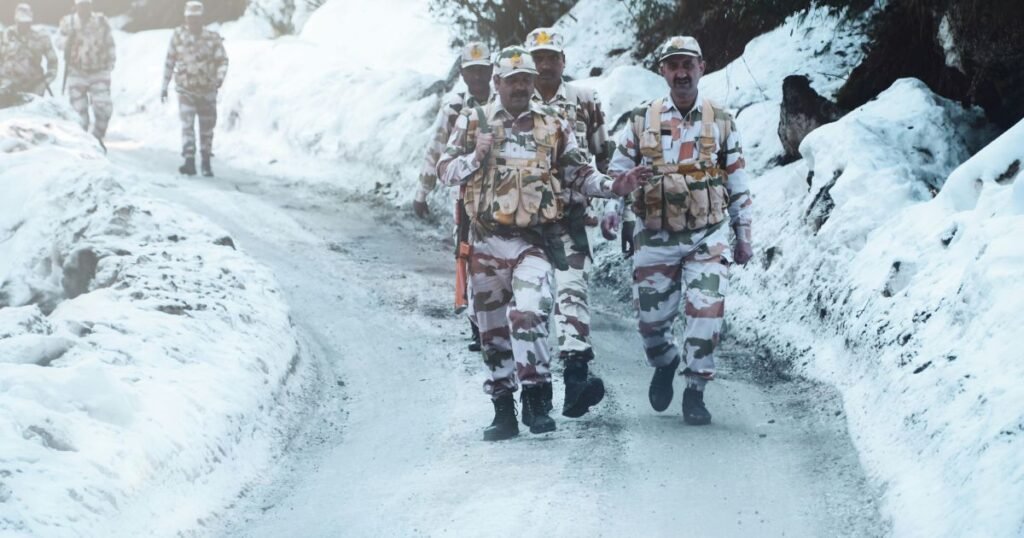
₹1.39 lakh crore, approximately 75 percent of the capital acquisition budget, has been earmarked for procurement from domestic industries. This is framed as the centrepiece of Atmanirbhar Bharat in defence, and in principle, it is the right direction. The private sector has matured enough to carry more of the load.
The problem is definitional. India counts procurement from Defence Public Sector Undertakings (DPSUs) — HAL, BEL, Bharat Dynamics — as domestic. These entities are state-owned, many are bureaucratically insulated, and their supply chains remain heavily import-dependent for critical components. A Tejas manufactured by HAL contains subsystems sourced from foreign OEMs. An indigenisation figure that includes DPSU orders without accounting for import content of those orders is more politically useful than analytically meaningful.
The private sector — Tata, L&T, Mahindra — is growing, and genuinely so. But they remain second-tier suppliers in a procurement ecosystem that continues, through informal preference rules, to route large contracts toward DPSUs first. Until the government publishes a transparent breakdown of domestic content within nominally domestic procurement, the 75 percent figure tells us where money is going, not how much of India’s capability is actually made in India.
The Counterargument Worth Taking Seriously
The case for the government’s framing is not trivial. Defence Secretary Rajesh Kumar Singh noted in September 2025 that a 10 to 15 percent annual increase in capital outlays would be adequate to meet requirements. This budget delivers 21.8 percent. The DRDO allocation has risen to ₹29,100 crore, with capital expenditure within that figure at ₹17,250 crore. Border Roads Organisation capital funding has risen to ₹7,394 crore, continuing a trajectory that has seen BRO’s capital works grow over 200 percent since 2015-16.
These are not trivial achievements. Infrastructure spending on the LAC has changed the operational calculus. The ammunition emergency, whatever its embarrassments, has been addressed with urgency. There is a real argument that India is finally closing some of the capability gaps that Galwan and then Sindoor exposed, and that the 2026-27 budget is a continuation of that correction.
The argument, however, proves too little. Closing gaps that should never have opened is the floor, not the ceiling. A country facing simultaneous pressure from a nuclear-armed Pakistan and a military peer in China cannot afford a defence budget that is losing ground as a share of GDP while pensions consume nearly a quarter of every rupee allocated.
What the Budget Cannot Fix
India’s defence challenge is not primarily a funding problem. It is a procurement-speed problem, a technology-absorption problem, and a force-structure problem that no annual budget can resolve by itself. The DAP 2020 reforms remain partially implemented. The theaterisation agenda is real but slow. The ammunition crisis that Sindoor exposed was the product of years of underpurchasing that no single year’s capital allocation can reverse.
The ₹7.85 lakh crore is the largest number in India’s defence history. It should be seen for what it is: a necessary response to an operational shock, delivered within structural constraints that remain unchanged. Until India either raises defence spending durably above 2.5 percent of GDP or undertakes the politically difficult work of pension and manpower reform, the headline number will continue to obscure more than it reveals.
The real test of India’s defence commitment will not be found in February’s Budget speech. It will be found in March, when the procurement files move, and in December, when the revised estimates reveal how much of the capital budget was actually spent.