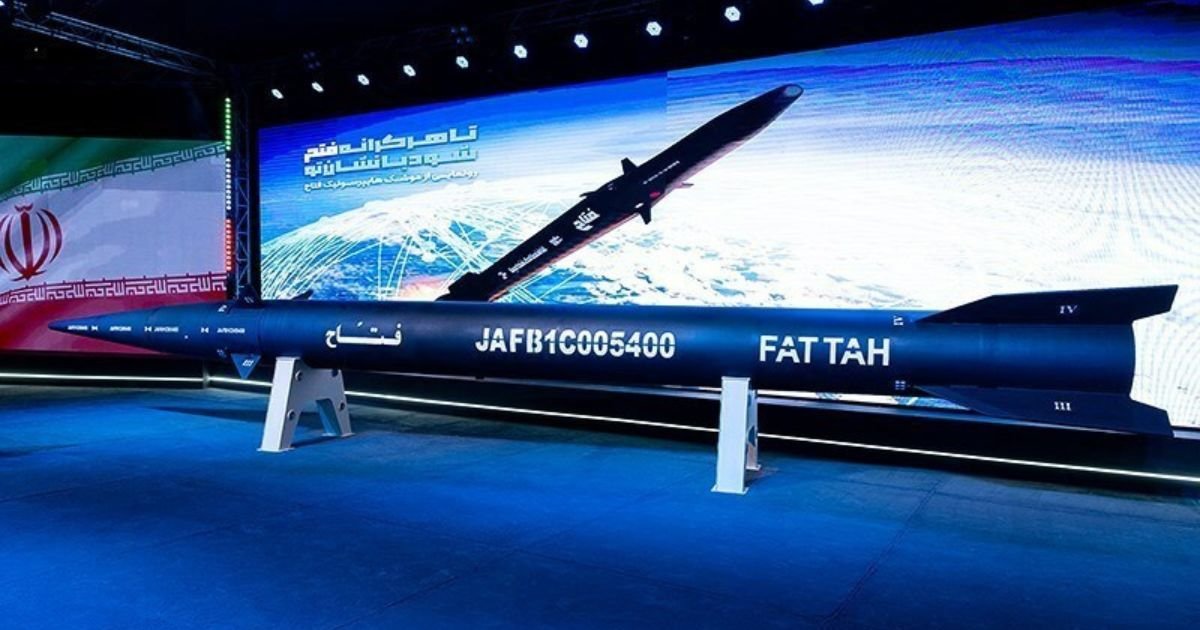
India’s defence procurement strategy has long been praised as a masterstroke of strategic autonomy. However, when Iran launched its latest barrage against Israel, something happened that genuinely surprised Western intelligence agencies. The missiles and drones that flew weren’t Russian. They weren’t Chinese. They were Iranian. Designed in Iran, built in Iran, tested in Iran, and launched without asking anyone’s permission or depending on anyone’s supply chain. The Fatteh-2 ballistic missile. Shahed series drones that had already proven themselves in Ukraine before anyone in Washington fully understood what they were looking at. Systems that American and Israeli analysts had underestimated in both capability and numbers, quietly developed over decades while the world assumed sanctions had capped Iran’s military ambitions.
Russia didn’t come to Iran’s aid. China didn’t either. Iran fought with what it had built. And what it had built was, by any honest assessment, considerably more capable than the outside world had credited.
India should be paying very close attention — not because Iran is a model to emulate, but because Iran just demonstrated, in real time and under fire, what genuine defence self-reliance looks like. And the contrast with India’s own approach to building military capability is uncomfortable enough to deserve an honest examination.
India's defence, delivered twice a week.
The Isolation That Forced a Choice
Iran has been under some of the most comprehensive sanctions in modern history for over four decades. It cannot buy American weapons. It cannot buy European weapons. Russian and Chinese transfers have been limited, politically complicated, and never reliable enough to build a military doctrine around. Faced with this reality, Iran made a decision that was not strategic brilliance so much as strategic necessity: it would build what it needed, or it would go without.
The result, visible now in real time, is a defence industrial base that produces ballistic missiles in multiple classes, a drone fleet that has influenced the conduct of two separate wars on two separate continents, and a hypersonic programme that was further along than anyone outside Iran knew. None of this happened because Iran had abundant resources or friendly technology partners. It happened because Iran had no choice but to build, and over forty years of sustained effort, it got genuinely good at it.
The uncomfortable question for India is straightforward. Iran, under maximum pressure, with a fraction of India’s economic resources and none of India’s access to global technology markets, built indigenous capability because it had to. India, with the world’s fifth largest economy, a thriving technology sector, and active defence partnerships with Russia, France, the United States, and Israel simultaneously, has spent those same decades buying. The contrast is not flattering, and the recent escalation with Pakistan made it operational rather than theoretical.
How Russia and China’s Silence Should Inform India’s Defence Procurement
When the missiles started flying over Israel, the geopolitical picture around Iran clarified in ways that extend well beyond the immediate conflict. Russia and China have warm relationships with Tehran. They share Iran’s interest in constraining American power. They have provided diplomatic cover, sold some technology, and maintained the relationship through years of Western pressure. When Iran needed them militarily, they stayed home.
This is not surprising to anyone who thinks clearly about how states behave under pressure. Russia is consuming its own military production in a war that has stretched its defence industrial base to capacity. China is managing its own strategic calculations about Taiwan, about its relationship with Washington, about the costs of being visibly associated with Iranian military action. Both countries made rational decisions based on their own interests. Iran’s security was not their problem in that moment, and no amount of prior diplomatic warmth changed that calculation.
India has watched this dynamic play out twice in recent years. It watched the United States help Israel intercept Iranian drones in April 2024, a coalition response that worked because Israel had spent decades building the kind of unconditional alliances that activate without negotiation. It watched Russia provide Iran no meaningful military support during the current escalation despite years of warming ties. The conclusion that serious Indian strategic planners should be drawing is consistent across both data points: the only military capability a country can count on absolutely is the capability it built itself and controls itself. Everything else is contingent on someone else’s interests aligning with yours at the exact moment you need them to.
India Defence Procurement: Multi-Vendor Strategy
There is a line that appears in almost every serious analysis of Indian defence procurement, delivered with the confidence of settled wisdom: India’s multi-vendor strategy is a strength. By buying from Russia, the United States, France, Israel, and others simultaneously, India avoids dangerous dependence on any single supplier and preserves strategic autonomy. It is a reasonable argument. It is also, at this point, functioning as an excuse, and the recent flare-up with Pakistan exposed the gap between the argument and the operational reality.
The origins of the approach are genuinely defensible. After the American arms embargo following the 1998 nuclear tests, India learned a hard lesson about what happens when a single supplier decides your security interests don’t align with theirs. Diversifying made obvious strategic sense. If one partner cuts you off, the others keep you operational. The diplomatic relationships built through defence purchases have real value — technology transfers, joint exercises, intelligence sharing, access to systems India couldn’t have developed domestically in available timeframes. These are not nothing, and dismissing them would be analytically dishonest.
What happened next is the problem. Over the following two decades, diversification stopped being a risk management strategy and became a procurement philosophy, a way of managing relationships and distributing contracts diplomatically, and a method of avoiding the difficult institutional work of building domestic capability. Buying from multiple countries became something India was good at. Building things became something India would get to eventually. Eventually became a permanent condition.
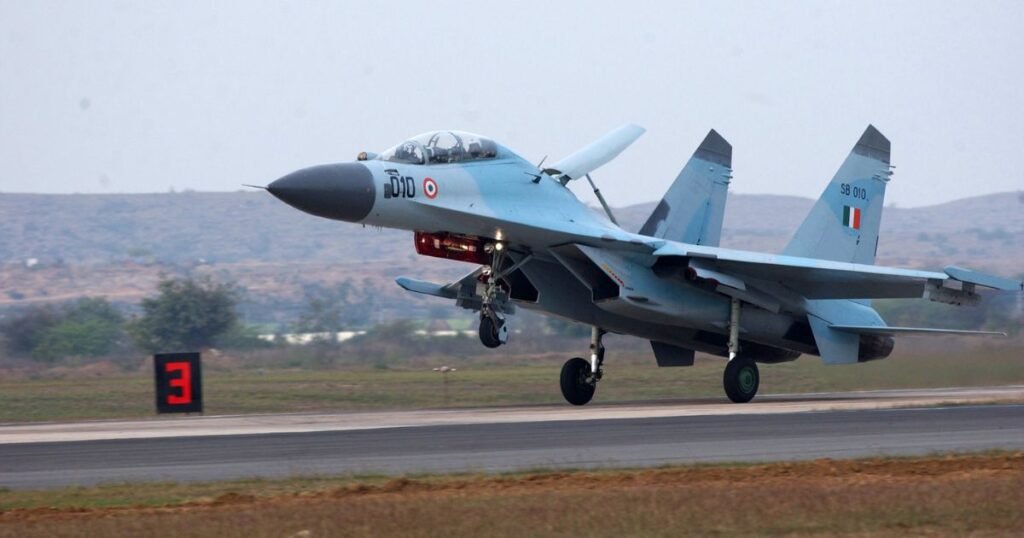
The result is an inventory that reads like a defence expo catalogue. The Indian Air Force operates Russian Su-30MKIs, French Rafales, and is acquiring more of both. The Indian Army runs Russian T-90 tanks alongside the domestically developed Arjun. The Navy operates Russian, Israeli, and domestically integrated systems across its fleet. Every individual acquisition had a justification. Collectively they created something nobody planned and nobody wanted: a logistical architecture of incompatible systems, separate supply chains, and maintenance requirements that span four continents.
When Pakistan Tests the Theory
The recent tensions with Pakistan moved these questions from planning documents into operational reality. When the situation escalated, every serious question about India’s military readiness eventually led back to the same place: how long can these systems be sustained, and who controls the answer to that question.
India’s Su-30MKI fleet, over 260 aircraft and the backbone of Indian air power, depends on Russian engines, Russian components, and Russian technical support for sustained operations. Since Russia’s full-scale invasion of Ukraine, its defence industrial base has been running at war production rates for its own consumption. Delivery timelines for Indian requirements have stretched. The assumption that Moscow will prioritise Indian spare parts over its own frontline needs during a conflict where India is not Russia’s primary concern is an assumption worth examining under pressure, not taking for granted.
The French Rafale fleet brings genuine world-class capability in numbers too small to carry a sustained air campaign independently. Support infrastructure runs through France. French political decisions about neutrality or escalation during a conflict involving India would directly affect the operational availability of those aircraft. Israel, which supplies a significant portion of India’s aerial munitions and missile technology, is currently fighting its own multi-front war, with its defence industries under production pressure from domestic requirements.
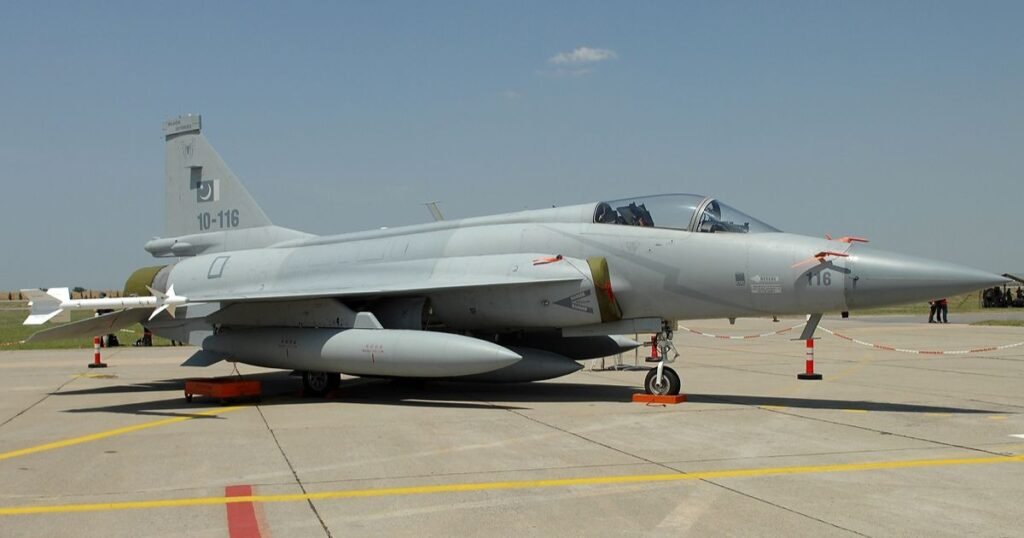
Pakistan, for all its economic difficulties, has spent decades building a more coherent supply relationship with China. Chinese platforms dominate the Pakistan Air Force — JF-17 fighters co-developed with China, HQ-series air defence systems, Chinese armour and artillery throughout the ground forces. The supply chain runs through one country with a clear strategic interest in keeping Pakistan capable as a permanent pressure point on India’s western flank. In a sustained conflict scenario, Pakistan’s resupply problem is structurally simpler than India’s. That asymmetry is not abstract. It is the kind of thing that determines outcomes when wars run longer than planned.
What Ukraine Settled
The war in Ukraine provided the most comprehensive real-world test of supply chain resilience under sustained combat that the world has seen in decades, and the lesson was unambiguous. Ukraine entered the conflict with a Soviet-era inventory. When attrition rates exceeded planning assumptions — as they always do in real wars — the resupply problem became existential. Ammunition calibres didn’t match Western stockpiles. Spare parts for Soviet platforms weren’t being manufactured at required scale anywhere outside Russia. The transition to Western equipment took months of retraining and created integration challenges that cost time and lives.
A country’s ability to sustain combat operations is determined not just by what it has on day one but by what it can produce and resupply through a conflict that lasts longer than anyone planned for. Ukraine, to its enormous credit, developed a remarkable domestic drone and munitions industry under wartime conditions. It took a war to force that development. The time to build industrial capacity is before the conflict, not during it, and certainly not while the conflict is already consuming your operational reserves.

The Foundation India Has and Isn’t Using
None of this argues for abandoning foreign partnerships. Russia’s platforms bridged critical capability gaps when domestic development couldn’t deliver. French and Israeli technology elevated Indian capabilities in domains where indigenous programmes were years behind schedule. The argument is not that India should stop buying from partners. The argument is that buying should be a supplement to domestic capability, not a substitute for it.
Iran built under conditions specifically designed to prevent it from building. Forty years of sanctions, technology denial regimes, and active efforts to sabotage its programmes. The Fatteh-2 and the Shahed drones exist despite all of that. India faces none of those constraints and has every advantage Iran lacked — capital, talent, a proven technology sector, and partnerships with the countries that make the world’s best weapons. What India has consistently failed to convert those advantages into is the institutional urgency that treats defence indigenisation as genuinely non-negotiable rather than as a policy preference to be pursued at a comfortable pace.
The iDEX programme, the private sector opening, the defence corridors, the expanding role of Tata, Kalyani, and L&T in defence manufacturing — these are real developments, not window dressing. The direction is right. The pace is not. Not given what is happening on the LAC, not given what the Pakistan escalation revealed about supply chain dependencies, and not given what Iran just demonstrated about what a country can build when it decides building is the only option.
The Fatteh-2 didn’t ask Russia for permission to fly. Iran’s drones didn’t wait for Chinese approval before they became a factor in two wars. India’s next generation of weapons — its missiles, its fighters, its air defence systems — shouldn’t have to ask anyone either.
The multi-vendor strategy was a bridge. India has been living on the bridge for thirty years. It is time to reach the other side.