The prototype has been rolled out. Internal ground trials are running. The DRDO chief has publicly committed to a first flight between June and July 2026. For a programme that has been announced, delayed, re-announced, and delayed again across three decades of Indian aviation history, the current moment is genuinely different. This is because the Tejas Mk2 is finally close to flying, but also because what happens next that will determine whether India has actually learned anything.
The Mk2 is not an upgraded Tejas. It is, in almost every meaningful sense, a new aircraft. At 17.5 tonnes it sits in the medium-weight fighter class, considerably heavier than the Mk1A, with 13 hardpoints, a 6.5-tonne payload capacity, the General Electric F414-INS6 engine producing 98 kilonewtons of thrust, the indigenous Uttam AESA radar, and an advanced electronic warfare suite that India has spent years developing. It is designed to replace the Indian Air Force’s ageing fleets of Mirage 2000, Jaguar, and MiG-29 fighters: aircraft that are collectively approaching the end of their operational lives and for which no adequate indigenous replacement has existed until now.
The Timeline India Needs to Reckon With
The Mk2 programme was authorised in 2009. Preliminary design studies completed in 2014. Detailed design ran through 2015. The aircraft was first publicly unveiled at Aero India in 2019. The first prototype rollout, originally targeted for late 2025, slipped to January 2026. First flight, once planned for early 2026, is now officially targeted for June–July 2026, with contingency reserves allowing for early 2027. Final operational clearance is expected in 2028, with induction into IAF service in 2028–29. Serial production from 2030.
India's defence, delivered twice a week.
That last figure is the one worth sitting with. Serial production of the Tejas Mk2 begins in 2030, which is twenty-one years after the programme was authorised. The aircraft it will replace are already old. The threat environment it was designed for in 2009 has changed significantly. China’s J-20, which began development in roughly the same period, entered squadron service in 2017 and now operates in excess of 250 airframes. India’s answer to the capability gap that programme was meant to close will begin arriving in meaningful numbers sometime in the 2030s.
This is not a reason to dismiss the Mk2. It is a reason to be precise about what it represents and what it does not.
What Has Actually Changed
The honest case for cautious optimism on the Mk2 rests on a few specific things that are genuinely different from the Mk1 experience.
The institutional memory argument is real. HAL has now completed the Mk1 cycle — design, testing, certification, limited production — and the engineers who built that aircraft are working on Mk2 with knowledge that did not exist when the Mk1 programme began. The supply chain around Tejas has matured. VEM Technologies is delivering centre fuselages. The Nashik production line is operational. These are not paper capabilities. The GE engine situation, which plagued Mk1A deliveries, appears to be stabilising. Commercial negotiations for the F414 engine deal were concluded in early 2026, and the manufacturing partnership with an Indian firm is expected to be finalised around March 2026.
The deliberate decision to roll out the Mk2 prototype without public ceremony is also meaningful. Previous Indian defence programmes have suffered from the pattern of announcement outpacing engineering, often milestones declared to satisfy political calendars rather than technical ones. The Mk2 team appears to have absorbed that lesson. The rollout happened quietly, the programme director has given measured timelines, and the institutional language around the programme is noticeably less triumphalist than its predecessors.
The Uttam AESA radar is the genuine technological prize here. An indigenous active electronically scanned array radar, integrated into a domestically produced airframe, would give India something it has not previously had: a combat aircraft where the most critical sensor system is not a foreign dependency. If it performs as advertised, it changes the export calculus for the aircraft significantly.
The Counterargument India’s Air Force Is Already Making
The IAF’s revealed preferences tell a different story than the official enthusiasm for the Mk2. The service is simultaneously pursuing 114 additional Rafales through a government-to-government route, actively exploring the F-35, and has expressed interest in Su-57 variants. These are not the procurement decisions of an air force that is confident its indigenous fighter programme will fill the gap in time.
The squadron strength problem is real and worsening. India currently operates around 30 fighter squadrons against a sanctioned strength of 42. Several Mirage 2000, Jaguar, and MiG-29 squadrons are approaching decommissioning on timelines that do not wait for the Mk2’s production ramp. The Mk1A, which was supposed to bridge this gap, has its own delivery delays, suffering from engines from GE arriving inconsistently, software integration challenges, and an IAF that has set demanding acceptance standards the aircraft is still working to meet.
A programme that begins serial production in 2030 and ramps to two aircraft per month — the most optimistic production estimate — will take years to fill six squadrons, let alone the additional 210 aircraft that have been discussed as a longer-term order. The arithmetic of India’s fighter shortfall does not resolve cleanly with the Mk2 timeline, which is presumably why the IAF continues to pursue foreign options in parallel.
What the Tejas Mk2 Actually Proves
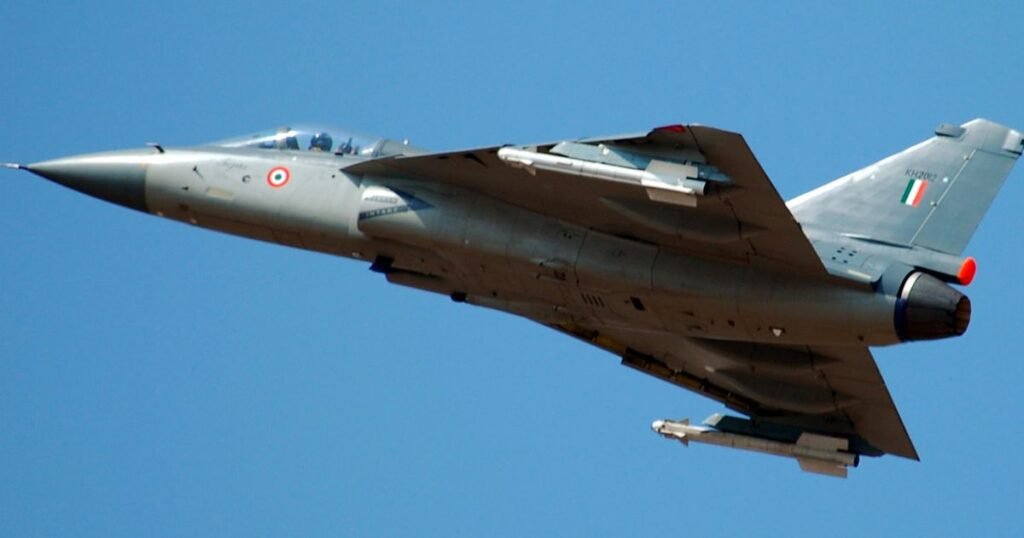
The more important question about the Tejas Mk2 is not whether it will fly in 2026 or 2027. It is whether India is building the institutional infrastructure that makes the aircraft after this one — the AMCA, the Twin Engine Deck Based Fighter — take ten years instead of thirty.
The Mk2 represents the second full cycle of India’s fighter design and development capability. The first cycle produced a capable aircraft after a dysfunctional process. The second cycle, if it delivers what is currently promised, will produce a more capable aircraft after a somewhat less dysfunctional process. That is genuine progress. It is also insufficient if the underlying institutional constraints such as the DRDO’s dual mandate, the procurement doom loop, the import lobby’s structural advantages, the inconsistency of political support across budget cycles remain fundamentally unchanged.
The iDEX programme and the opening to private sector defence manufacturing are the more important variables. If HAL’s supply chain for the Mk2 genuinely draws in private sector manufacturers at scale, if the engine partnership with GE builds real indigenous capability rather than licensed assembly, if the Uttam radar programme produces a sensor that can be iterated and exported, then the Mk2 is the platform on which India builds a genuine aerospace industrial base. If those conditions are not met, it remains an impressive engineering achievement sitting atop a procurement system that will produce the next generation too slowly, at too great a cost, with too many foreign dependencies.
The prototype is in the hangar. The first flight is months away. The real test of what India has learned from the Mk1 programme begins the moment the production order lands and the clock starts on how quickly the IAF actually receives the aircraft it needs.