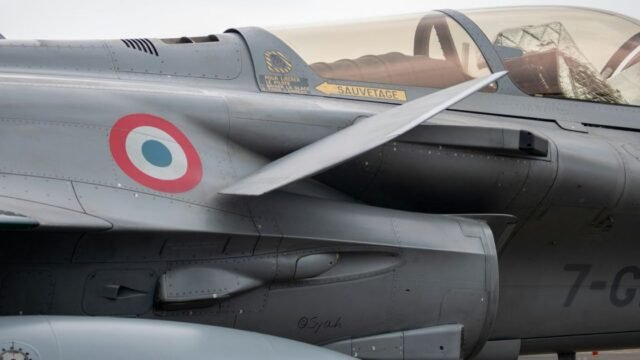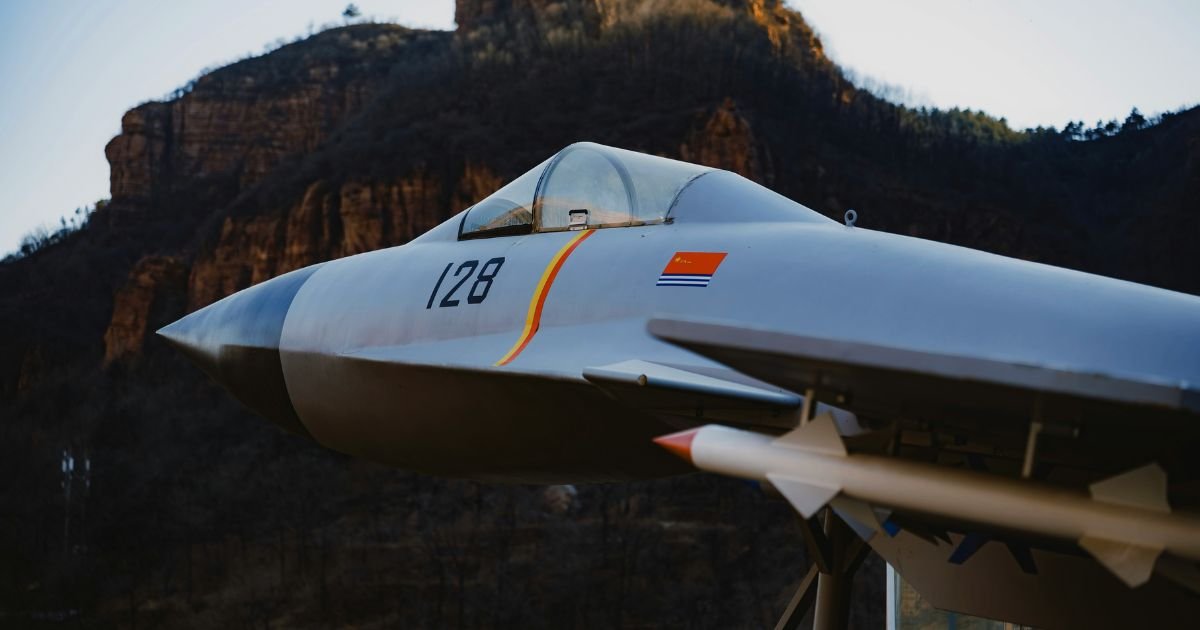
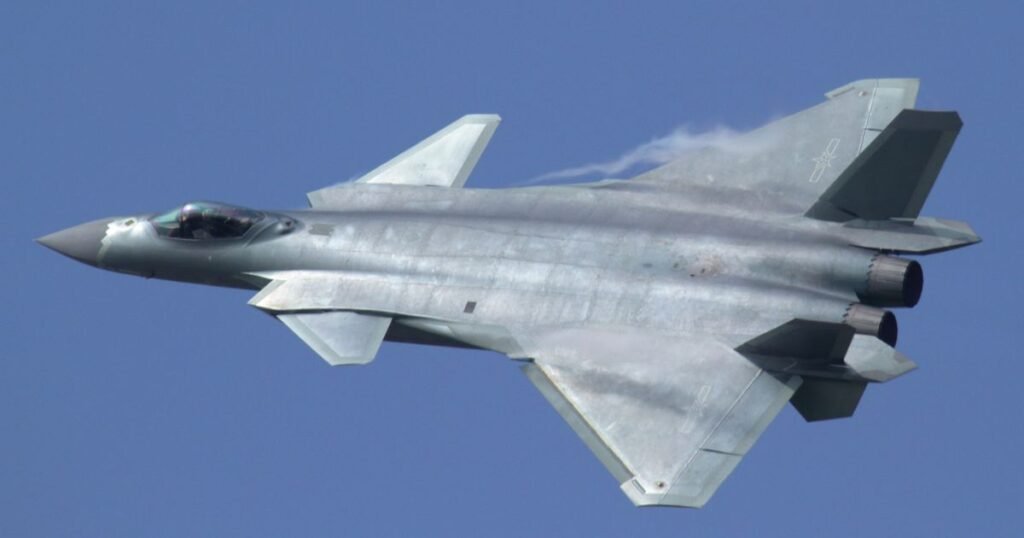
India’s defence R&D problem is not a shortage of talent. China’s J-20 stealth fighter first flew in January 2011. Six years later it entered squadron service. By early 2026, the PLA Air Force operates more than 250 of them, with production lines turning out dozens annually. India’s Tejas light combat aircraft, whose development began in the 1980s, has still not equipped even half the squadrons originally planned. Both programmes began in roughly the same era. One emerged from a system designed for speed and iteration. The other emerged from a system designed for process compliance. The gap between them is not an engineering story. It is an institutional one.
The Gap Is Already Dangerous
China’s official defence budget for 2026 stands at approximately $277 billion. India’s allocation for the same period is around $94 billion. The raw numbers are sobering enough, but the more important comparison is what happens inside those budgets. India’s DRDO receives roughly 29,100 crore rupees this year, less than four percent of the total defence outlay. China does not publish a precise R&D figure, but its civil-military fusion policy channels tens of billions more through private technology giants directly into military programmes, meaning the real gap in research spending is considerably larger than the headline defence budgets suggest.
The speed differential shows up in delivery timelines. China’s DF-17 hypersonic glide vehicle was publicly revealed in 2019 and is now deployed in significant numbers. The Type 055 destroyer, among the most heavily armed surface combatants in the world, entered service in 2020 and the navy already operates eight of them with more under construction. India’s domestically built INS Vikrant aircraft carrier, a genuine achievement and a point of legitimate pride, took fifteen years from steel cutting to commissioning. Both facts can be true simultaneously — India is building, and China is building faster, at greater scale, across more platforms.
India's defence, delivered twice a week.
The multiplier behind China’s pace is civil-military fusion. Beijing deliberately integrates private sector breakthroughs in artificial intelligence, quantum computing, and materials science into defence programmes through subsidies, mandates, and shared laboratories. Huawei, DJI, and dozens of less visible technology firms feed directly into PLA capability development. The result is an innovation cycle measured in months rather than decades, one that India’s state-dominated model structurally cannot replicate without significant reform. The gap is not static. It is widening at a pace that incremental budget tweaks will not close.
DRDO: The Promise and the Problem
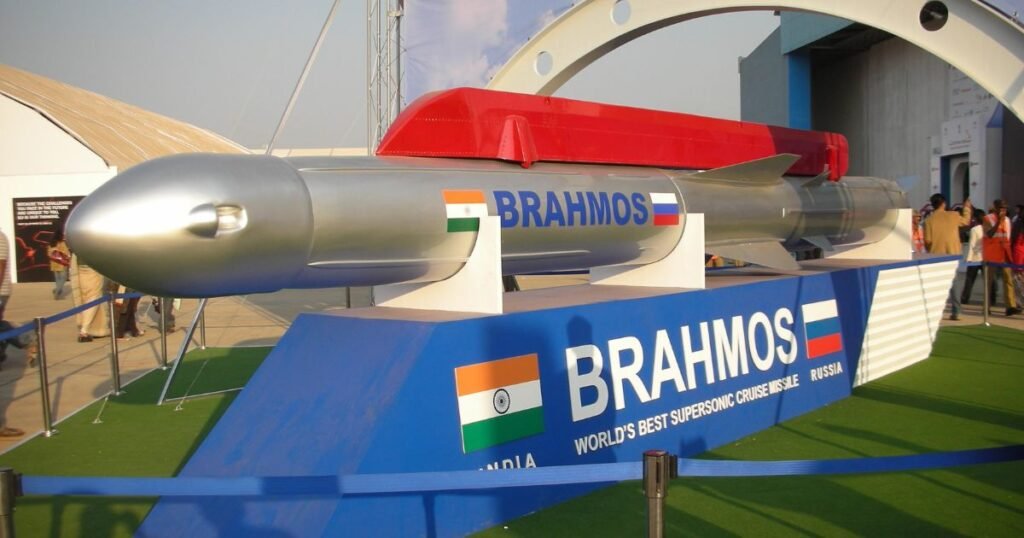
DRDO is not a failed organisation, and treating it as one is both analytically lazy and unfair to the scientists who have spent careers building India’s defence capability under genuinely difficult conditions. The BrahMos cruise missile, developed jointly with Russia, is among the fastest operational cruise missiles in the world and one of India’s most successful defence exports. The Agni series underpins India’s nuclear deterrent. The Akash air defence system provides a domestically developed surface-to-air missile capability that would not exist without decades of sustained DRDO work. The Arjun tank programme, whatever its induction struggles, proved that Indian engineers could design a modern main battle tank from scratch.
The problems are structural rather than human. The organisation is built around process compliance rather than outcomes, around managing risk rather than accepting it, and around serving simultaneously as research body and programme manager for systems that eventually need to be manufactured at scale. These are contradictory mandates that create friction at every stage of development.
The procurement doom loop sits at the centre of the problem. India’s armed services prefer foreign equipment because it arrives proven, on schedule, and with established training and support infrastructure. Because the services prefer foreign equipment, domestic programmes struggle to secure the firm orders that justify serious investment. Because they cannot secure orders, they cannot fund the iteration cycles that would make them competitive. Because they remain uncompetitive, the services continue to look abroad. This loop has been running for decades across fighters, tanks, helicopters, and now drones. Make in India has bent it at the edges. Nobody has broken it decisively.
The Tejas programme illustrates both sides of this dynamic honestly. The aircraft that eventually emerged is a capable platform, and the engineers who built it deserve genuine credit for what they accomplished within a system that worked against them at almost every turn. The forty-year timeline is not primarily a story of engineering failure. It is a story of inconsistent political support, import lobbies with strong financial incentives to undermine domestic alternatives, and a procurement culture that treats delay as an acceptable outcome and foreign equipment as the default fallback whenever a domestic programme hits difficulties.
What Slow India Defence R&D Actually Costs
Abstract arguments about bureaucratic inertia are easy to dismiss as the perennial complaint of frustrated reformers. Concrete examples are harder to ignore.
India’s Rustom programme, later renamed TAPAS, was an attempt to develop a domestically built medium-altitude long-endurance surveillance drone. Development began in the early 2000s. The first flight occurred in 2016. By 2026 the platform has still not met the full operational requirements of the three services, despite repeated timeline extensions and cost overruns. During those same two decades, drone warfare transformed from a niche capability operated by a handful of militaries into a primary mode of conflict. The war in Nagorno-Karabakh in 2020 demonstrated what cheap armed drones could do to a conventionally superior military. Ukraine from 2022 onwards demonstrated it at massive, sustained scale. India watched both conflicts, drew the obvious lessons, and is still purchasing armed drones from Israel and the United States while waiting for its own MALE capability to mature.
Every year of delay on a domestic programme is another year of import dependency, another year of foreign leverage, and another year of missed institutional learning. Defence manufacturing is not like other industries where catching up is simply a matter of licensing technology and scaling production. The deep knowledge embedded in designing, testing, failing, and iterating on complex weapons systems cannot be imported. It accumulates through sustained work on real programmes, including the ones that fail expensively and publicly.
India’s defence R&D spending as a share of GDP has remained stubbornly below 0.1 percent despite repeated Make in India announcements. Budget speeches promise defence self-reliance. The actual budget lines move incrementally. Political attention peaks during border crises and fades once the immediate pressure recedes. Meanwhile, foreign original equipment manufacturers maintain large offices in Delhi, cultivate relationships with service headquarters across years and decades, and offer financing packages and certified supply chains that domestic alternatives simply cannot match in their early years. The import lobby does not require conspiracy. It needs only the continuation of a status quo that serves it extremely well.
What Is Actually Working
The iDEX programme, launched in 2018, has produced something genuinely encouraging. Small companies are building capable drone systems, electronic warfare tools, AI-powered surveillance platforms, and specialised ammunition variants at a fraction of the cost and time that traditional DRDO procurement cycles require. Several iDEX winners have moved from prototype to limited user trials in under two years, a pace that would have been unthinkable in the traditional defence procurement framework. The programme has demonstrated that India’s deep tech startup ecosystem, given a clear problem statement and access to a real customer, can move at speeds that institutional structures make impossible elsewhere.
The private sector opening more broadly has brought Kalyani Group, Tata Advanced Systems, and L&T Defence into serious defence manufacturing for the first time, bringing supply chain discipline, commercial urgency, and engineering talent that the public sector struggles to attract and retain at scale.
Israel’s experience is instructive here, not as a template to copy wholesale but as proof of what becomes possible when a government treats defence innovation as national security infrastructure rather than a procurement preference. The Israeli defence industry was built by a government that used state procurement as the anchor customer giving domestic companies revenue to invest in R&D, and created deliberate pathways for technical talent to flow between military service, academia, and private companies. Alumni of Unit 8200, Israel’s signals intelligence unit, have founded dozens of defence and cybersecurity companies. India has no equivalent pipeline, and building one requires sustained political commitment of a kind that survives election cycles and budget pressures.
India already has the raw ingredients. World-class research institutions in the IITs and IISc, a proven deep tech startup ecosystem, and defence reforms that have genuinely opened the door to private participation. What is missing is scale, commitment, and the willingness to back domestic players with the kind of orders and funding that allow a prototype to become a production programme.
What Actual Reform Looks Like
The changes required are not mysterious or particularly radical. Most of them have been recommended in various forms by successive committees and expert groups over the past two decades. The gap between recommendation and implementation is itself a precise measure of how seriously India has treated its own defence industrial future.
Separate DRDO’s frontier research function from its programme management role, and structure each part of the organisation around what it is actually suited to do. Create a small, high-autonomy defence research agency modelled on DARPA, with an explicit mandate to fund high-risk programmes that mainstream procurement would never touch and the institutional permission to fail fast and iterate. Make iDEX procurement commitments binding rather than aspirational, so that winning a competition translates into a guaranteed order pipeline rather than a certificate on a wall. Mandate a domestic content threshold in defence procurement that increases each year and carries real consequences for missing it. Raise the defence R&D budget to at least two percent of total defence expenditure as a floor, protected from the annual budget pressures that have historically raided it.
China filed more patents in directed energy weapons last year than India has filed across its entire defence R&D history. The strategic cost of continued drift is no longer theoretical. It is measurable in lost autonomy, rising import bills, and widening capability gaps that adversaries are already exploiting. India does not lack the talent, the technology sector, or the industrial base to build what its security situation demands. What it lacks is the institutional urgency to match the scale of the threat. That urgency cannot be manufactured by another committee report or another defence expo announcement. It has to show up in budget lines, procurement decisions, and the political willingness to back domestic programmes through their difficult early years rather than reaching for the familiar comfort of a foreign supplier.
The window to act is closing. The competitor is not waiting.